
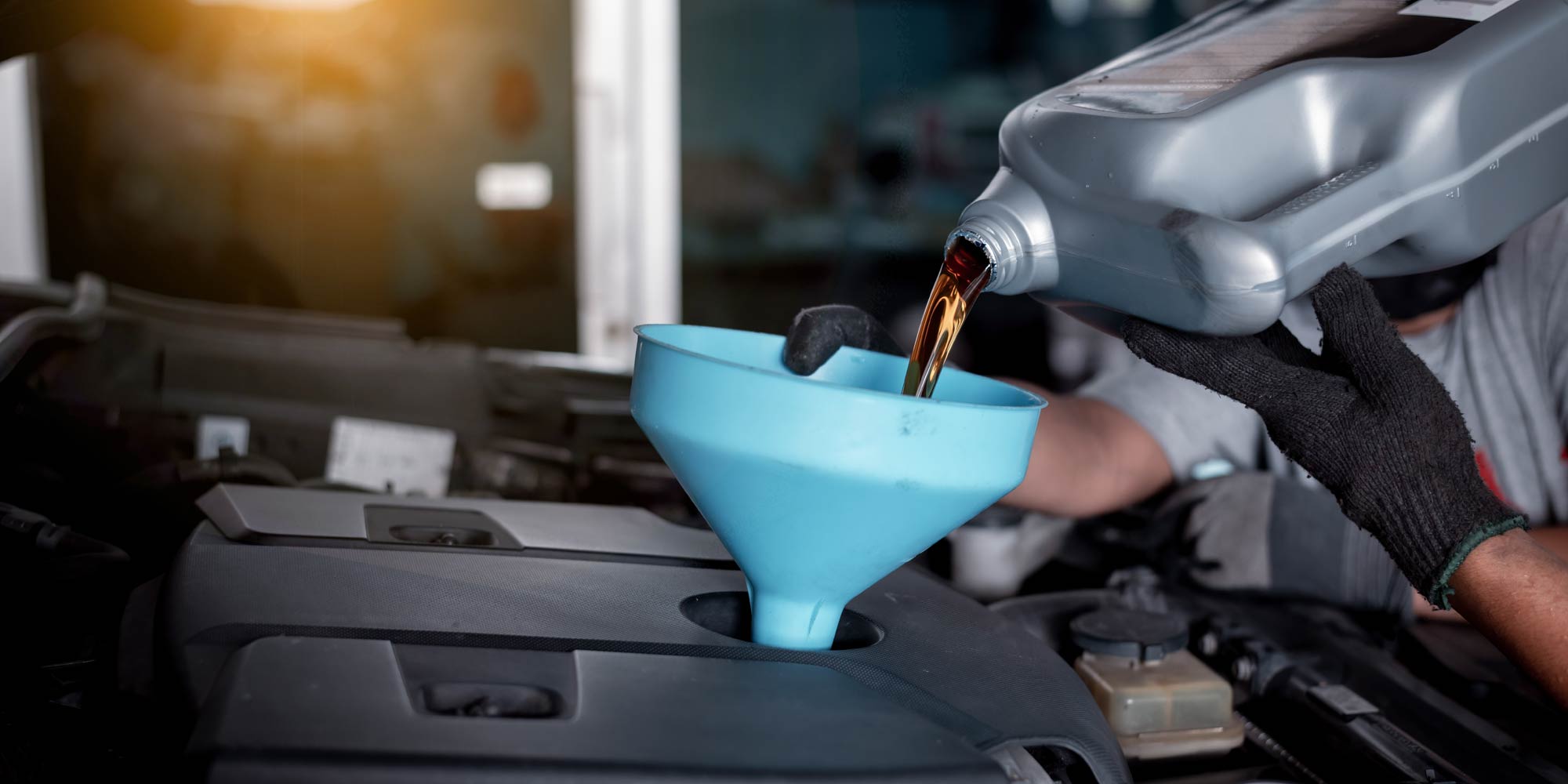
Engine oil is the single cheapest insurance policy on a car. It's also the easiest place for a shop to upsell a customer who isn't sure what they actually need. Drivers all over the country end up paying for full synthetic when their car is fine on a blend — and the opposite happens too, where someone's running conventional in an engine that's been spec'd synthetic since it left the factory. Here's how to tell which side you're on.
01What's actually different about synthetic oil
All motor oil starts as a base oil plus an additive package. The difference between conventional, synthetic blend, and full synthetic comes down to two things: how the base oil is made and how stable it stays under heat and pressure.
- Conventional — refined directly from crude oil. The molecules are uneven sizes, which means it breaks down faster under heat and leaves more residue inside the engine over time.
- Synthetic blend — a mix of conventional and synthetic base oils. It runs cleaner and lasts longer than conventional, at a smaller premium.
- Full synthetic — engineered base oils with uniform molecule size. It flows better when cold (a real benefit in New England winters), holds up longer at high temperatures, and keeps engines cleaner over the life of the car.
Modern engines — especially turbocharged ones, direct-injected ones, and most cars built after roughly 2014 — run hotter and tighter than older engines. That's the simple reason most automakers now specify full synthetic from the factory.
02How to find what your specific car requires
You don't need to guess. Two places to look:
- The owner's manual. Open the maintenance section and look for "engine oil." It will list the required viscosity (a number-letter-number like 0W-20 or 5W-30) and usually a spec like API SP, ILSAC GF-6, or a manufacturer-specific certification. If the manual says "full synthetic required," that's the answer — running anything else can void warranty coverage and shorten engine life.
- The oil cap on the engine. Most modern cars have the recommended viscosity printed right on the cap.
If both sources point to a synthetic spec or a viscosity like 0W-20, your car needs full synthetic. If the manual lists conventional or a synthetic blend as acceptable, you have a real choice to make — and that's where the next section comes in.

03Quick comparison: when each oil makes sense
| Oil type | Best for | Typical interval |
|---|---|---|
| Conventional | Older engines (pre-2010 era) where the manual lists conventional as acceptable. Lower-mileage drivers on a budget. | 3,000–5,000 miles |
| Synthetic blend | Mid-2000s to mid-2010s vehicles with moderate mileage. A reasonable middle path when the manual permits it. | 5,000–7,500 miles |
| Full synthetic | Most newer vehicles (especially turbo, direct-injected, or hybrid). Required by many automakers. Better cold starts in NH winters. | 7,500–10,000 miles* |
| High-mileage formula | Engines past ~75,000 miles that are starting to show seal seepage or burn a bit of oil. Includes seal conditioners. | Per manufacturer interval |
*Check your owner's manual — some manufacturers (especially European brands) extend full-synthetic intervals further. Always defer to the actual vehicle requirement, not a sticker on the windshield.
04The myths to ignore
"Once you switch to synthetic, you can't go back."
Not true. Synthetic and conventional oils are fully compatible. Synthetic blends are literally a mixture of the two. The "you can't switch back" idea has been busted for over a decade.
"Synthetic causes leaks in older cars."
Modern synthetics are formulated to be safe with older seals. What sometimes happens is the cleaner detergent action of synthetic reveals a seal that was already worn and being held together by sludge. That seal was failing either way — the synthetic just exposed it sooner so you could fix it.
"You have to change synthetic at 3,000 miles too."
No. The 3,000-mile interval is a holdover from 1970s conventional oil. Modern synthetics in modern engines comfortably hit 7,500–10,000-mile intervals when used as the manufacturer specifies. Always follow your vehicle's published interval — not the sticker your last shop put on the windshield.
05What an honest oil change costs
Oil change starting at $89.95.
That includes up to 5 quarts of oil, the correct OEM-spec filter for your vehicle, and a multi-point courtesy inspection. Each additional quart is $8.95 if your engine takes more than 5. We use the oil grade your manufacturer specifies — we don't "tier-up" you into something you don't need.
Larger vehicles, diesels, and some European cars take 6–8 quarts, so we'll quote that up front. If a synthetic blend is acceptable on your car and you'd prefer it for cost reasons, we'll tell you straight.
06How to avoid being upsold anywhere
You can use this script at any shop in the country, including ours:
- "What does my owner's manual specify?" A good shop will tell you the exact viscosity and spec without flipping to a price sheet first.
- "Is my car required to use synthetic, or is it a recommendation?" If it's recommended but not required, you can stay with a synthetic blend if budget is tight.
- "What's the actual interval the manufacturer publishes?" Anyone telling you to come back at 3,000 miles for a modern car running synthetic is either misinformed or upselling visits.
If the answers feel scripted instead of honest, that's a signal. A good shop wants you back in 7,500 miles for a real reason — not in 3,000 because the sticker said so.
We service drivers across Derry, Manchester, Londonderry, Salem, Windham, and the rest of southern New Hampshire. If you'd like a straight answer on what oil your car needs, give us the year, make, and model — (603) 825-3815, support@vorenzarentals.com, or our contact form.