
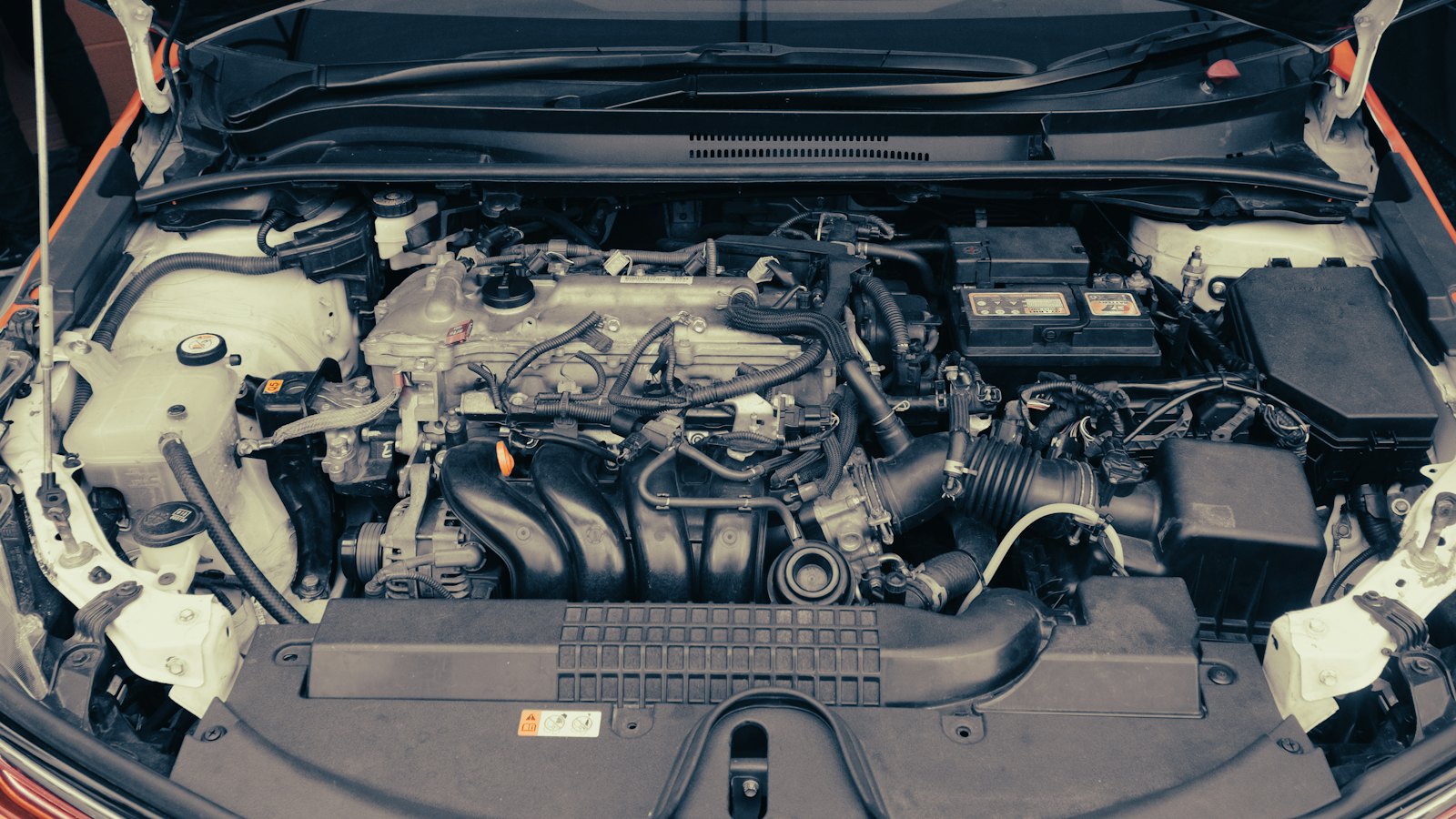
It usually starts on the first raw morning of fall. You turn the key, and the engine takes a beat longer than it used to before it catches. It starts, you drive to work, and you forget about it — until the next cold morning takes two beats. That drawn-out crank is the warning we hear about most, and it's why requests for car battery replacement in Derry, NH climb every year between the first frost and the first real cold snap.
Here's the honest part: the battery gets blamed for plenty it didn't do. A new battery on a failing alternator is dead again within a week, and a corroded cable can make a good battery look finished. That's why at Vorenza Auto Repair we test before we sell you anything.
Why car batteries give out early in southern New Hampshire
A battery doesn't wear out on a date. It loses a little capacity every month, and it only tells you on the day you ask for more than it has left. Our climate and our driving habits ask for a lot.
Heat does the damage; cold sends the bill
It sounds backwards, but summer is what ages a battery. High under-hood temperatures speed up the chemical wear inside it — something we flag every June in our summer car maintenance checklist. Winter is simply when the damage shows. Cold can cut a battery's cranking power by 30 to 50 percent at the same moment thickened oil makes the engine harder to turn over. A battery that limped through a hot July can't cover that gap on a 10-degree January morning.
Short trips never pay the battery back
Starting the engine takes a big gulp from the battery, and the alternator only puts it back while you drive. A 25-minute run up I-93 to Manchester does that easily. A day of five-minute hops — school drop-off, the post office, a coffee on Route 28 — with the heater, defroster, heated seats and headlights all running often doesn't. Do that all week and the battery starts every morning a little further behind.
Newer cars draw power even when they're off
Keyless entry, the alarm, connected-car services and the computers that remember your settings all sip a little current while the car is parked. That's normal, and a healthy battery shrugs it off. An aging battery in a car that sits for a week or two — a vacation, a second car that only comes out on weekends — may not. And a fault that draws more than normal, like a glovebox light that stays on or a module that never goes to sleep, can flatten even a brand-new battery overnight.
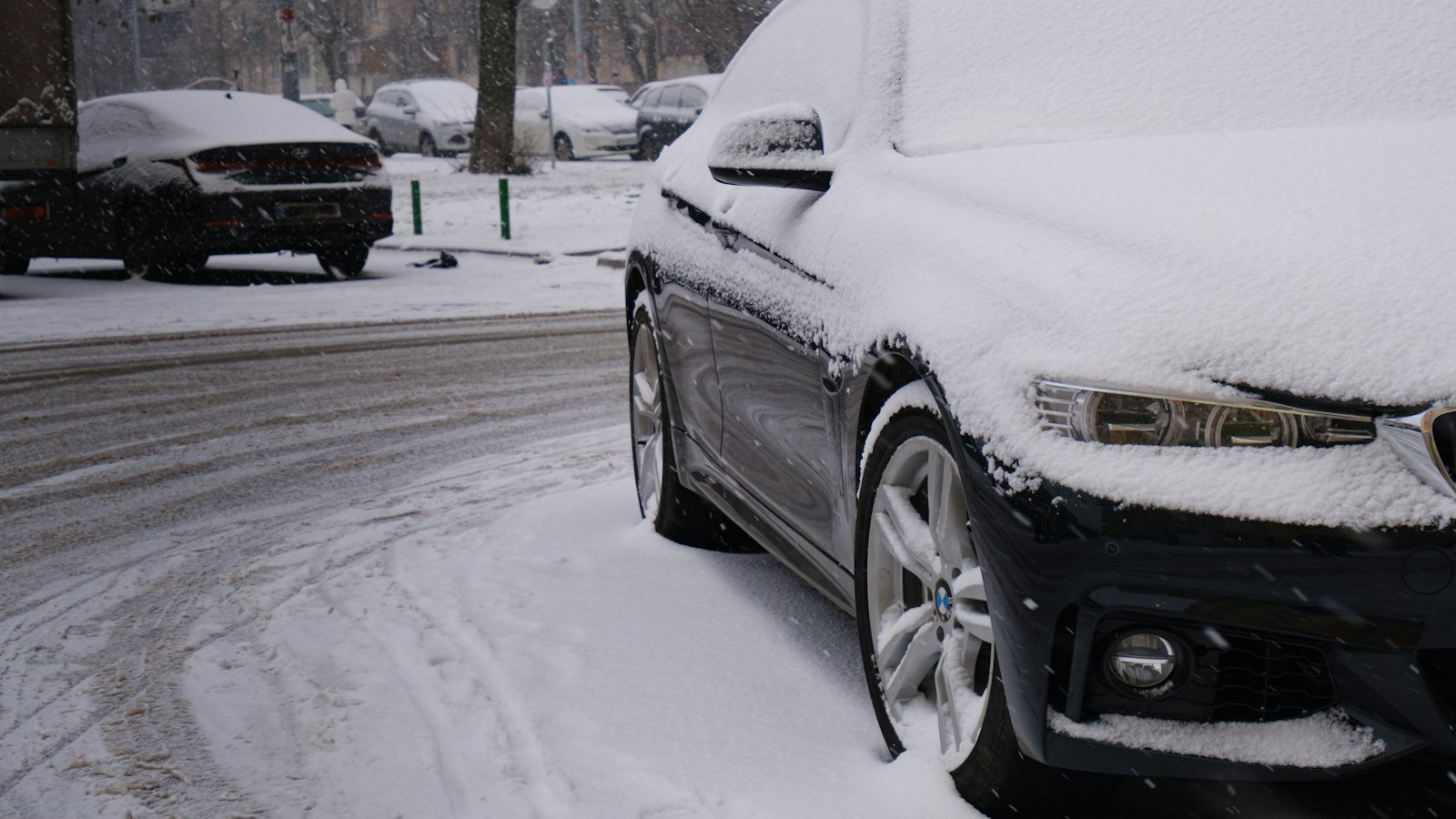
A car that sleeps outside through a New Hampshire January asks its battery for the most power on the morning the battery has the least to give.
6 signs you need car battery replacement in Derry, NH
Any one of these is a reason to have the battery tested this week, not at your next oil change. Two or more together, and it's rarely a close call.
→The engine cranks slower than it used to
The classic early warning, and the easiest to talk yourself out of. The car still starts, just with a slower, lazier crank — worst on the first start of a cold morning, fine by the afternoon. That's a battery with very little left in reserve. If you ignore it: the gap between “slow” and “won't” is usually one cold night, and it tends to arrive with a tow bill or a missed shift attached.
→You've needed a jump start — even once
A jump gets you going; it doesn't tell you why the battery was flat. Sometimes the reason is innocent, like a dome light left on overnight. Often it isn't — and one deep discharge can take a real bite out of an older battery's capacity. When to come in: within a few days of any jump, so we can test the battery and charging system before it happens again somewhere less convenient.
→Clicking, flickering dash lights, or nothing at all
Rapid clicking when you turn the key means there's enough power to trip the starter relay but not enough to spin the engine — usually a very low battery. Dash lights that dim or flicker while you crank, a radio that loses its presets, or a keyless system that suddenly won't recognize the fob all point the same way. A single loud click with bright dash lights is a different problem — see the table below.
→The battery is four or five years old — or you don't know its age
Plenty of batteries in this climate give out somewhere between three and five years, and one pushing four or five is on borrowed time even if it hasn't complained yet. Look for a date sticker or stamp on the case; if you bought the car used and can't find one, assume it's older than you'd like. What we recommend: once a battery turns three, have it tested every fall. It takes minutes.
→Corroded terminals, or a swollen or leaking case
White or blue-green crust on the terminals adds resistance between the battery and everything it powers; sometimes cleaning and tightening them is the whole fix. A case that's bulging, cracked or wet, or a rotten-egg smell around the battery with the hood open, is another matter — that battery is failing internally. Don't jump-start it. Call us and we'll help you get the car here safely.
→Start-stop quits working, or the electronics act strange
On many newer vehicles, auto start-stop is the first feature the car switches off when it senses a weak battery — so if your engine has stopped shutting off at red lights and you didn't change a setting, pay attention. Slow power windows, a rebooting infotainment screen or a sudden cluster of unrelated warning lights can trace back to low voltage too. As we explain in our check engine light guide, a weak battery can set misleading codes that clear once the battery is sorted.
Dead battery or alternator? How to tell what's actually wrong
Three parts share the job of starting and running your car, and the battery is just the most famous one. The battery supplies the burst of power to start the engine. The starter is the motor that uses that power to turn the engine over. The alternator takes over once the engine is running, powering the electrics and recharging the battery. When one of them fails, the symptoms overlap enough to fool almost anyone. Here's how they usually sort out:
| What you notice | Usually points to | What to do |
|---|---|---|
| Slow, labored crank that's worst on cold mornings; starts fine once warm | A weak or aging battery | Test the battery; replace it only if it fails |
| Starts after a jump, dead again the next morning | A battery that won't hold a charge, or a hidden drain | Battery test first, then a draw test if the battery passes |
| Headlights dim at idle, battery light on, or the car stalls while driving | The alternator or charging system | Get it checked soon — a battery can't keep a car running on its own for long |
| A new battery goes dead again within days or weeks | An alternator that isn't charging, or a parasitic drain | Charging-system and draw test before buying another battery |
| One loud click, dash lights stay bright, engine doesn't turn | The starter motor, its relay, or its wiring | Starter circuit test |
| Whining or grinding from the front of the engine, or a hot-electrical or burning-rubber smell | An alternator bearing or the drive belt | Have the belt and alternator inspected promptly |
| A no-start that “fixes itself” after someone wiggles the battery cable | A loose or corroded battery connection | Clean and tighten the terminals — sometimes the cheapest fix of all |
The battery light is usually about charging, not the battery
It's a reasonable assumption — the icon is literally a battery — but on most cars that light means the charging system isn't doing its job, often because of the alternator or its drive belt. The battery is now running everything on its own, and it will run out. If it comes on while you're driving, switch off what accessories you safely can and head somewhere sensible — not onto a long highway run.
Why we test before we replace anything
A battery that has just been charged or jumped can show a healthy voltage and still collapse the moment a cold start asks for real current, so a quick voltage reading isn't a proper test. We test the battery under load, check the alternator's output with the engine running, and look over the terminals, cables and belt. When a car keeps killing batteries, our electrical diagnostics trace the drain instead of guessing. You hear the result before anything gets replaced.
Car won't start? A quick checklist before you call
- Turn everything off — headlights, heater blower, radio, phone chargers — and wait a minute before you try again.
- Listen to what it does. A slow crank, rapid clicking, a single click and total silence each point somewhere different (see the table above).
- Rule out the simple stuff. Check the shifter is fully in Park. With push-button start, try holding the fob right against the start button in case the fob's own battery is weak.
- Look — don't touch — at the battery. A cracked, swollen or leaking case, or a rotten-egg smell, means no jump start. Call instead.
- If you jump it, follow your owner's manual. Many newer cars have dedicated jump-start points under the hood because the battery itself lives in the trunk or under a seat, and the connection order matters.
- Get it tested within a day or two. A drive puts some charge back, but it won't fully recharge a deeply drained battery — and it can't tell you why the battery died.
- Won't restart at all? Call us at (603) 825-3815 and we'll help coordinate getting it to the shop. If you already have a tow service, they can deliver it to 15 Central St, Unit B, Derry.
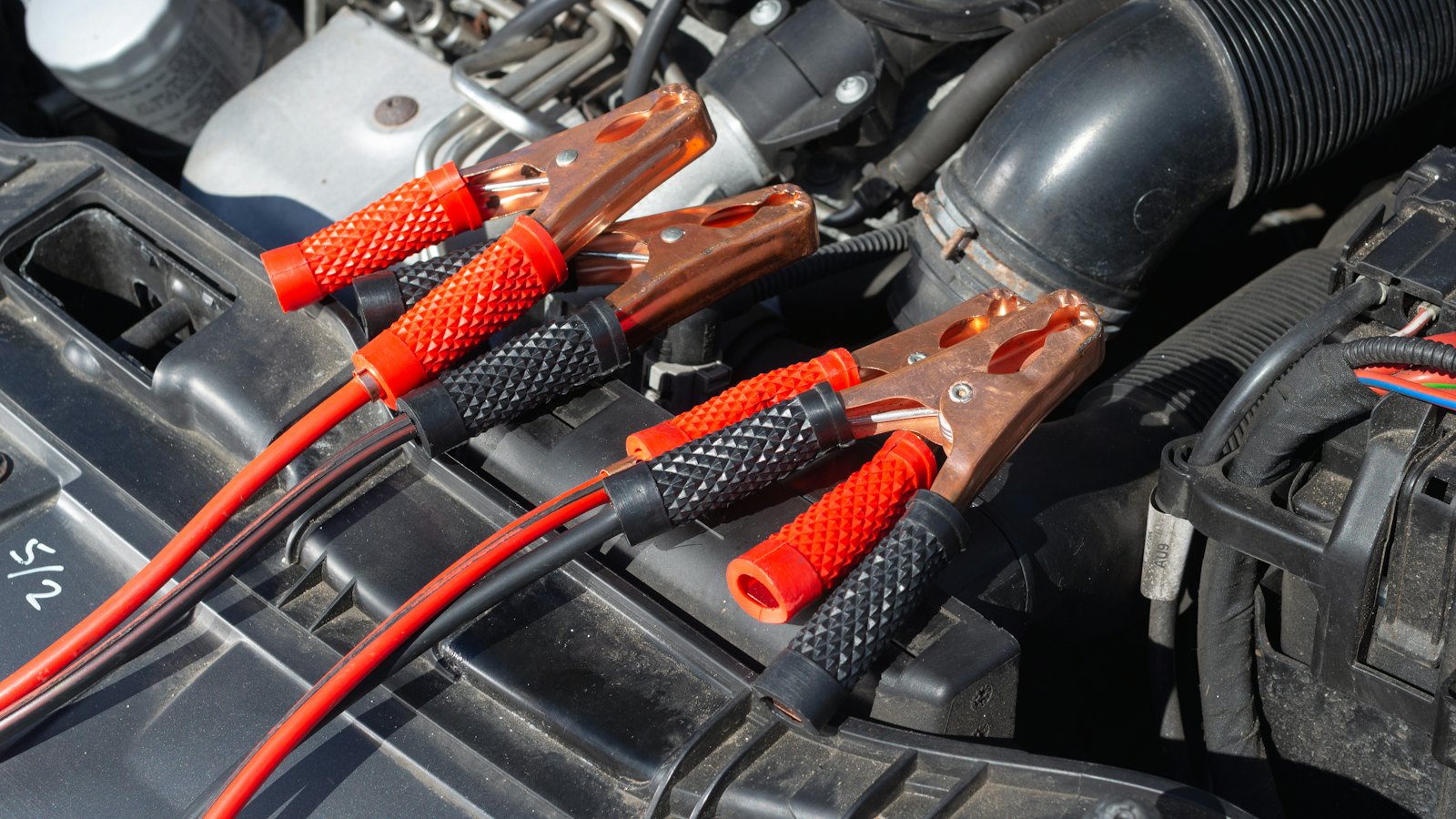
A jump start gets you home. It doesn't tell you whether the battery, the alternator or a hidden drain is what left you stranded in the first place.
What battery replacement involves on a newer car
On an older sedan, a battery swap is a hold-down clamp and two terminals. On a lot of what's parked in Derry driveways today there's more to it — which is why the cheapest battery on the shelf isn't always the cheapest outcome.
- The right size and cold-cranking rating. Batteries come in group sizes and are rated in cold cranking amps (CCA) — how much current they can deliver in the cold. We match or beat your manufacturer's spec — going below it to save a few dollars is a bad trade in a New Hampshire January.
- AGM versus conventional. Vehicles with auto start-stop or heavy electrical loads often leave the factory with an AGM (absorbent glass mat) battery. Swapping in a cheaper conventional battery tends to shorten its life and can make start-stop misbehave. Like for like.
- Battery registration. Many newer vehicles have a battery-management system that adjusts charging to the battery's age and type. On those cars, the new battery has to be registered with a scan tool, or the car keeps charging it like the old, worn-out one.
- Where it lives. Under the hood is quick. Under a seat, in the trunk or behind a wheel-well liner takes longer — which is why we quote your vehicle rather than publish one number.
- Relearns and the rest of the circuit. Some cars need the power windows, sunroof or idle relearned after the battery is disconnected, and every new battery deserves clean terminals, sound cables and an alternator that's actually charging. That's part of doing the job properly, not an add-on.
Our technicians are ASE-certified and work with professional-grade, manufacturer-level scan tools, so on most vehicles registration and relearns happen in the same visit instead of turning into a separate trip to the dealer.
What a battery replacement costs — and what we won't guess at
We publish starting prices for the services that genuinely have one, and we don't invent numbers for the ones that don't. Batteries are a good example: the right battery for a twelve-year-old compact and an AGM battery for a start-stop SUV that needs registering are not the same job. What you get instead is a test, a written estimate with parts and labor separated, and your approval before we replace anything.
| Service | Price |
|---|---|
| Battery & charging-system check Part of the multi-point courtesy inspection on every maintenance visit: battery condition, alternator output, terminals and cables. | included |
| 12V battery replacement Quoted to your vehicle — battery type (conventional or AGM), cold-cranking rating, where it's mounted, and whether it needs registering. You approve the estimate first. | custom quote |
| Alternator or starter replacement Only after testing confirms it's the problem. Parts and labor broken out on a written estimate. | custom quote |
| Electrical diagnosis (drains, repeat no-starts) Technician time to trace a parasitic drain or an intermittent fault. We tell you the fee before we start, and it's often credited toward the repair. | quoted up front |
| Oil change (up to 5 quarts) $8.95 per quart after the first 5. Includes the multi-point courtesy inspection — which is when most tired batteries get caught before they fail. | from $89.95 |
Every repair we perform is backed by a 12-month / 12,000-mile warranty on parts and labor. You can see our full maintenance services and pricing, along with the repairs we handle when it turns out to be the alternator or starter after all.
A battery replaced on your schedule is a planned, one-visit job. One that fails in January usually costs more than the battery: a tow or roadside call, a morning of work, and sometimes whatever battery the nearest store has rather than the one your car was built for. The test is the cheap part — which is exactly why it's worth doing first.
Car battery FAQs — from drivers in Derry, Manchester & Southern NH
How long does a car battery last in New Hampshire?
Most last somewhere between three and five years here, and hot summers followed by cold winters tend to push them toward the shorter end. Short-trip driving and cars that sit for long stretches shorten that further. Age alone doesn't condemn a battery, though — once yours is three years old, a quick test every fall tells you far more than the date sticker does.
How can I tell if it's my battery or my alternator?
As a rule of thumb, a battery problem shows up when you try to start the car — slow cranking or clicking, especially on cold mornings. An alternator problem shows up while the car is running — dimming headlights, a battery warning light, electrics fading, or a stall. The giveaway is a new battery that goes dead again within days: that almost always means the alternator isn't charging or something is draining it. A charging-system test settles it in minutes.
How long does a car battery replacement take?
On most vehicles it's done in the same visit. How long depends on where the battery is mounted — under the hood is quick, under a seat or in the trunk takes longer — and whether the car needs the new battery registered. We'll give you a realistic time when we quote it, and because we work by appointment, your car goes straight in.
Can I replace my car battery myself?
On many older cars, yes — wear eye protection, take the negative cable off first and put it back on last, and take the old battery somewhere that recycles it. On a lot of newer vehicles it's less simple: AGM batteries, batteries mounted in the trunk or under a seat, and cars that need the new battery registered with a scan tool. If yours is one of those, or you'd rather know the alternator is healthy before you spend money on a battery, we're happy to take care of it.
Do I need an appointment for a battery test or replacement?
Yes — we work by appointment only, open daily 8am–6pm, and we often have same-day availability. If your car won't start at all, call us first at (603) 825-3815 and we'll help coordinate getting it to the shop. If you already have a tow service, they can deliver it to 15 Central St, Unit B, Derry, NH 03038.
Bottom line: test it on your schedule, not the tow truck's
Most batteries give plenty of warning — a slower crank, one jump start, a start-stop system that quietly gave up. The smart way to handle car battery replacement in Derry, NH is a little boring: treat those signs as the warning they are, test it in the fall, replace it if it fails, and make sure the alternator and connections are healthy so the new one lasts. That takes a few minutes and a shop willing to tell you when the answer is “it's fine, see you next year.” If you're thinking about winter more broadly, our guide to getting your car ready for a New Hampshire winter covers the rest of the list.
Questions first? Email support@vorenzarentals.com or send a message through our contact form. We serve Derry, Manchester, Londonderry, Salem, Windham and the rest of southern New Hampshire.