

There's a particular January morning every New Hampshire driver knows: it's nine degrees, you're already late, and the car turns over half a second too slow before it catches — or doesn't. Almost none of that has to be a surprise. Figuring out how to get your car ready for winter in New Hampshire is really just a short list of checks done in the fall, before the first hard freeze does the testing for you. At Vorenza Auto Repair in Derry, we winterize cars all autumn for I-93 commuters, families shuttling kids around Derry and Londonderry, and high-mileage drivers who need one more dependable season. Here's the checklist we use, why our winters make each item matter more, and what it costs — no scare tactics, no upsell.
How to get your car ready for winter in New Hampshire: the short version
If you only skim one thing, skim this. The rest of the article explains the why behind each item — but a fall visit that covers these seven points is what keeps a southern NH car dependable from November through March:
1. Battery & charging — tested before the first hard freeze
2. Tires — tread depth checked, cold pressure set correctly
3. Antifreeze & heater — coolant mixed strong enough for NH lows
4. Brakes — pads and rotors checked before ice season
5. Oil — fresh, correct winter-weight for cold starts
6. Visibility — wipers, winter washer fluid, lights, defrost
7. Rust & road salt — undercarriage rinsed and inspected
Why a New Hampshire winter is so hard on your car
"Winterizing" sounds like something for snowmobiles, not daily drivers. But New England winters put a specific kind of stress on an ordinary car, and it stacks up:
- Brutal cold starts. At single-digit temperatures, oil thickens and a battery loses a big chunk of its cranking power — the two things a car needs most at 7 a.m. in a Manchester driveway.
- Road salt and brine. The salt that keeps Route 28 and I-93 driveable is quietly eating your brake lines, exhaust, and undercarriage from below all season long.
- Freeze-thaw and short trips. A commute that never fully warms the engine lets moisture collect in the oil and the exhaust, and the daily freeze-thaw cycle works it into every seam.
- Ice and traction. Black ice on a back road near Beaver Lake doesn't care how new your car is — only how much grip your tires have and how well your brakes work.
None of this is exotic. It's just months of it, which is why a car that shrugs off a mild winter elsewhere needs a little more attention here.
Your winter car prep checklist: the New Hampshire edition
Here's each item in plain English — what to check, why it matters more in the cold, and when it's worth having a shop handle it.
→Test the battery before the first hard freeze
Cold weather can strip 30–50% of a battery's cranking power, and the summer heat you just came through has usually already worn it down. If your battery is more than four or five years old, it's the single most likely thing to leave you stranded in January. A charging-system test takes minutes and tells you whether it'll make it — far better to learn that on a lift than in a parking lot. We check the battery, alternator output, and terminals as part of a winter maintenance check.
→Make sure your tires can actually handle winter
Grip is everything on snow and ice, and two things decide it: tread and pressure. Worn tires that were fine in July become a real problem on an unplowed hill. Dedicated winter tires grip noticeably better once temperatures stay below about 45°F — most of a NH winter — but healthy all-seasons with good tread will get many drivers through. Tire pressure also drops roughly 1 psi for every 10°F, so tires that read fine in October are often low by December. Bring it in and we'll check tread depth, set the cold pressure, and tell you honestly whether your current tires are up to the season.
→Check your antifreeze — and your heat
Engine coolant isn't just "antifreeze" in name. Mixed correctly, it protects your engine well below any temperature New Hampshire throws at it; weak or old coolant can gel in the cold and corrode the system from inside. A quick test strip shows whether yours is still doing its job. While we're there, we confirm the heater and defroster work — on a frozen morning that's a visibility and safety issue, not a comfort one.
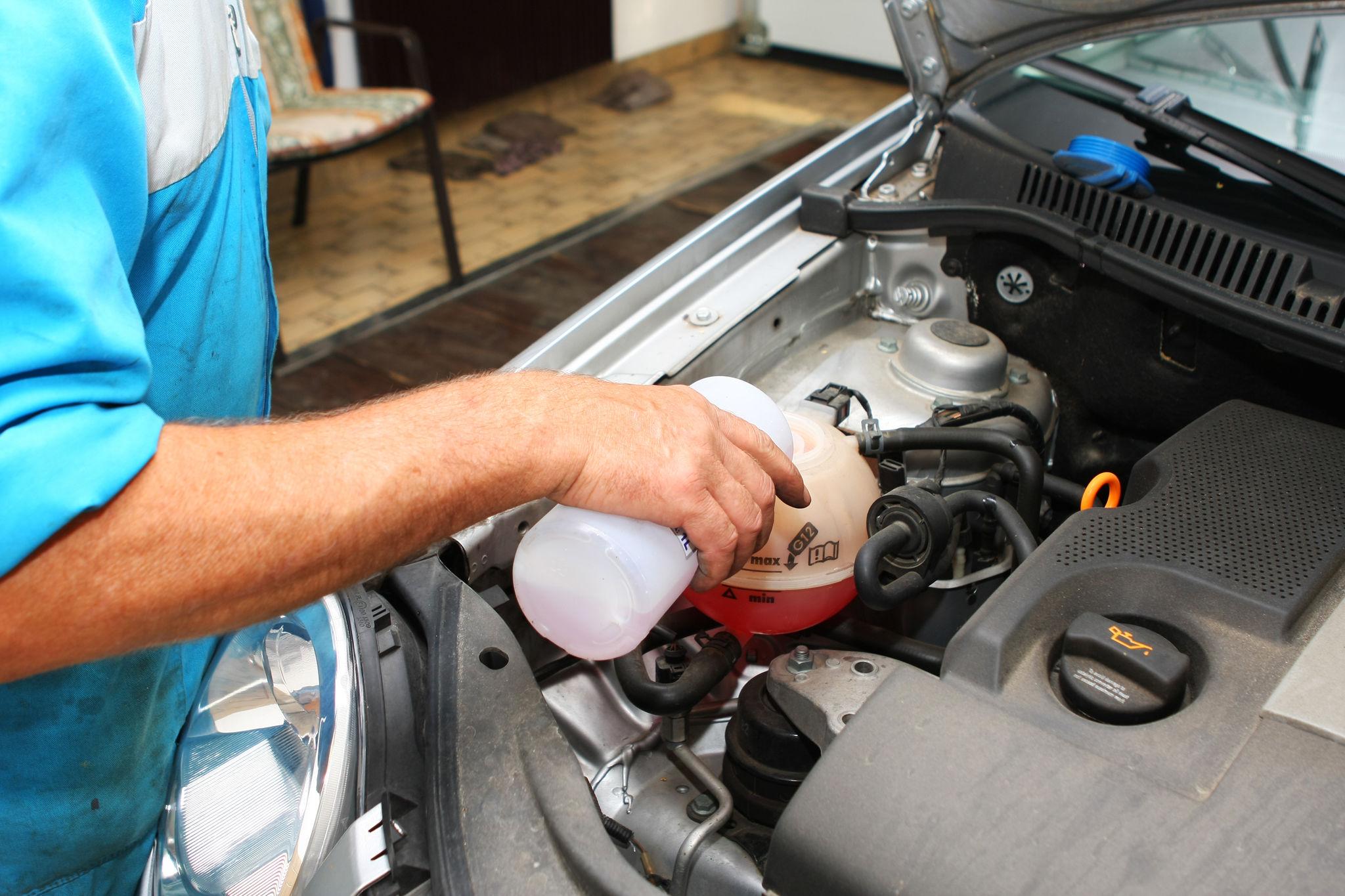
Coolant that's mixed and topped off correctly is your cheapest insurance against a frozen or overheated engine come January.
→Don't head into winter on worn brakes
Stopping distances are already longer on snow and ice, so winter is the worst time to discover your pads are gone. Road salt makes it worse: it corrodes rotors, calipers, and brake lines, so brakes that were quiet in the fall can seize or grind by February. If it's been a while, have the pads and rotors looked at now. Ours start at $299 per axle, quoted in writing before any work — see our brake and general repair service, or our full brake repair cost guide if you want the line-item breakdown first.
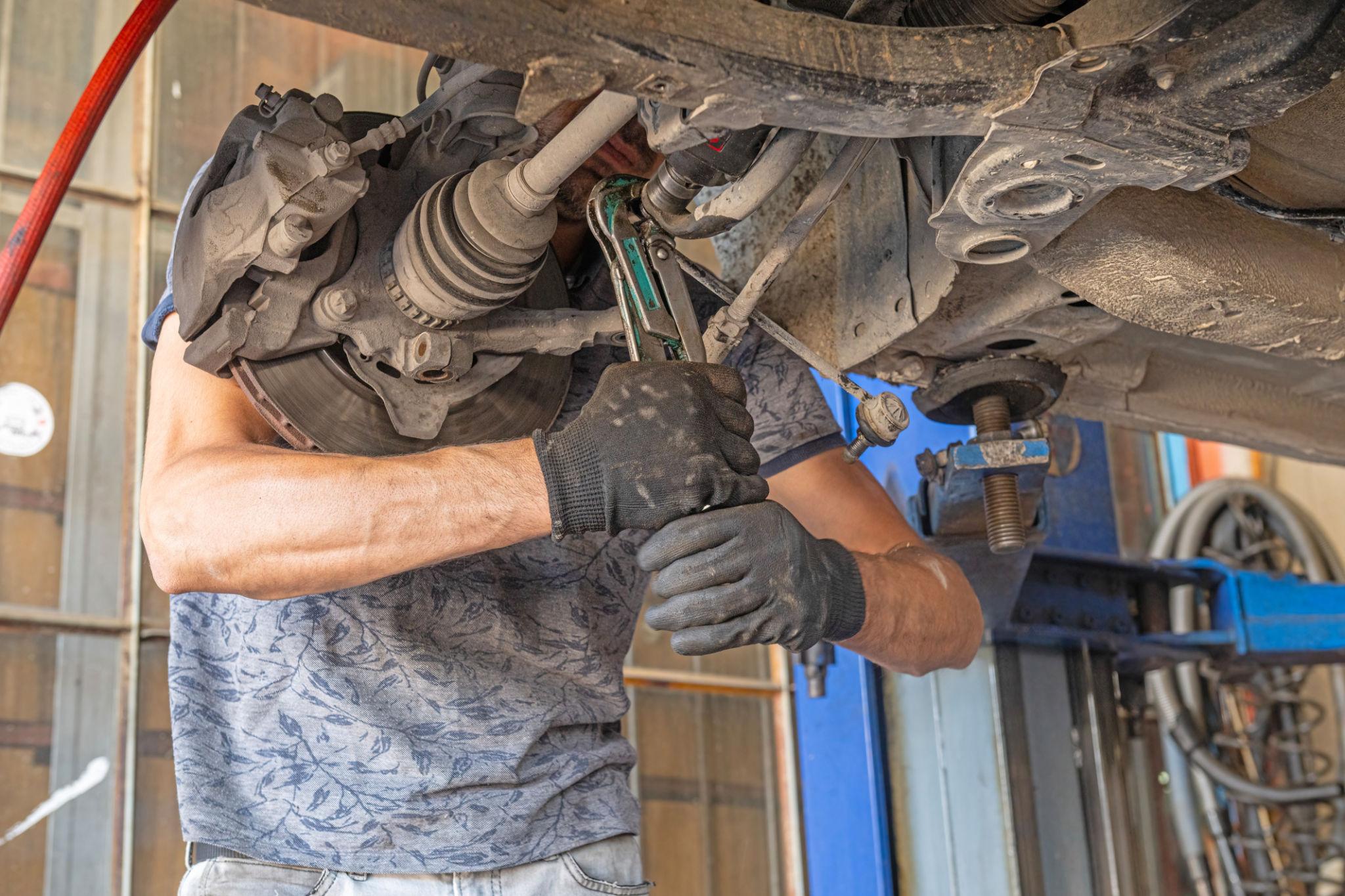
A car up on the lift is the moment to catch salt-corroded brake lines and rotors — before they become an emergency on ice.
→Fresh oil for cold starts
Most engine wear happens in the first seconds after a cold start, when thick, cold oil is slow to reach everything it needs to protect. Clean oil at the right winter-weight flows faster and cushions better on those brutal mornings. If you're close to due, going into winter is a smart time to change it. Oil changes here start at $89.95 and include a courtesy multi-point inspection — and if you're unsure what your car needs, our guides on how often to change your oil in NH and synthetic vs. conventional oil break it down.
→See and be seen: wipers, washer fluid & lights
Winter driving is half about visibility. Swap wiper blades that streaked all last season, and switch to a winter-rated washer fluid that won't freeze on the glass the moment you spray it — a summer-grade jug will. Check that all your lights work and your headlights aren't hazed over, since you'll be driving home in the dark far more often, and make sure the rear defroster and heated mirrors clear properly.
→Fight the road salt before it fights you
Salt is the number-one reason cars in New Hampshire wear out from underneath. Through the season, rinse the undercarriage after storms — a plain-water rinse on a thaw day does real good — and have the exhaust, brake lines, and frame inspected for corrosion before spring. Catching a rusting exhaust or brake line early is a small repair; ignoring it isn't. Our guides on exhaust repair and the pre-purchase inspection both go deeper on what salt does under there.
Here's the good news: nearly all of this fits into one visit. Every service at our shop includes a courtesy multi-point inspection, so a single fall appointment tells you the real condition of your battery, brakes, tires, and fluids — how we catch a $40 problem before it becomes a $400 tow. It's the same honest approach behind our work across Derry, NH and the surrounding towns.
What a winter-ready service costs at our Derry, NH shop
What you spend depends entirely on what your car actually needs — a battery and coolant that check out cost you nothing but the inspection. Here are the published numbers behind the two items drivers ask about most, with no surprise fees at the counter:
| Service | Price |
|---|---|
| Oil change (up to 5 quarts) Fresh oil for cold starts, an OEM-spec filter, and a courtesy multi-point inspection. | from $89.95 |
| Each additional quart For trucks, SUVs, and larger engines that hold more than 5 quarts. | $8.95 |
| Brake pads & rotors A common winter fix when salt and wear catch up with your brakes. | from $299/axle |
Battery, coolant, tire, and wiper checks are part of the courtesy multi-point inspection, so you'll know what's actually worth doing before the cold arrives. We work by appointment, quote anything we recommend in writing, and back covered repairs with a 12-month / 12,000-mile warranty. Nothing gets done to your car without your say-so.
Winter car care FAQs — from drivers in Derry, Manchester & Southern NH
How do I get my car ready for winter in New Hampshire?
Start before the first hard freeze. Have the battery and charging system tested, check your tire tread and set the cold tire pressure, confirm your antifreeze is mixed strong enough for New Hampshire lows, and have worn brakes and old oil taken care of. Then top off winter-rated washer fluid, replace tired wiper blades, and rinse road salt off the undercarriage through the season. A single courtesy multi-point inspection at our Derry shop covers most of that in one visit.
Do I need snow tires in New Hampshire?
Dedicated winter tires grip noticeably better on snow and ice than all-season tires once temperatures stay below about 45 degrees, which is most of a New Hampshire winter. If you regularly drive unplowed roads or steep hills, they are worth it. At a minimum you need healthy tread and correct cold tire pressure. Bring the car in and we will check your tread depth and pressure and tell you honestly whether your current tires will get you through the winter.
When should I test my car battery for winter?
Test it in the fall, before the first hard freeze. Cold weather can cut a battery's cranking power by 30 to 50 percent, and summer heat has usually already worn it down. Batteries more than four or five years old are the most common cause of a January no-start. We test the battery, charging system, and terminals as part of a winter check so you find a weak battery in the shop instead of in a parking lot.
Does road salt really damage my car?
Yes. The salt and brine New Hampshire towns spread all winter accelerate rust on your brake lines, exhaust system, fuel lines, and undercarriage. It is the single biggest reason cars here wear out from underneath. Rinsing the undercarriage after storms and having the exhaust and brake lines inspected in late winter catches corrosion before it turns into a much bigger repair.
How much does a winter-ready service cost at your Derry, NH shop?
It depends on what your car needs. An oil change starts at $89.95 for up to 5 quarts ($8.95 per additional quart), and brake pads and rotors start at $299 per axle. Battery, coolant, and tire checks are part of a courtesy multi-point inspection, and anything we recommend is quoted in writing before we do the work. Call us at (603) 825-3815 to get on the schedule.
Bottom line: an afternoon in the fall beats a tow in January
You don't need to do all seven of these yourself, and you don't need to panic-buy every winter gadget in the parts store. Get the battery, tires, coolant, brakes, and oil looked at once before the cold sets in, keep winter washer fluid in the reservoir, and rinse the salt off when you can. Do that and you've handled the vast majority of what strands New Hampshire drivers every winter.
Ready to get ahead of it? Call (603) 825-3815, email support@vorenzarentals.com, or use our contact form to book a winter check. We're at 15 Central St, Unit B, Derry, NH 03038, open daily 8am–6pm by appointment, serving Derry, Manchester, Londonderry, Salem, Windham, and southern New Hampshire.